Showing posts with label Hamamelis virginiana. Show all posts

Sunday, November 20, 2016

The beginning of the end of fall

Only a week after the black oaks in the neighborhood were at there most brilliant, they are fading to brown.  Oaks like these are "tardily deciduous," meaning the dead leaves hang--sometimes all winter--before falling as late as spring budbreak.  Red oak leaves are brown and dead, white oaks are mostly bare.  The first sugar maples helped kick off the color fest weeks ago, but they're individualists, and one or two still have a few yellow leaves.  Red maples paralleled the sugar, and are losing their last leaves.  River birches are sparse and yellow.  Among native trees, basswood is still yellowing, while green leaves still cling to some paper birches.  

Some lesser folk such as nightshade remain green to the bitter end.  Multiflora rose, too, is green as long as there is any light and warmth at all left in the year. 

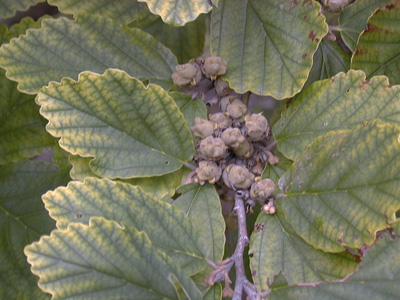
Witchhazel is alone among the woody plants of my acquaintance in being in flower right now, though the flowers are looking a bit the worse for wear.  The seeds are forcefully ejected from the pods not at the end of flowering, but the following fall, just as the flower buds are about to open.  The witchhazel on the corner had a good fall last year, and sent many children of into the world in the second half of October, as this year's flower buds swelled and burst.  


Mostly oaks along my street.  11/5/16

Black oaks (Quercus velutina) on 11/11.

Last and brighest of the neighborhood black oaks.  11/13

November 19th: black oak scarlet fades to brown.

 Basswood, aka linden (Tilia americana), has lost few leaves, and many are still partly green. 11/19

Nightshade hangs on.  11/19

The first witchhazel (Hamamelis virginiana) fruits burst around October 14th.

By 10/29 leaves are gone, most flowers were open and most pods were empty.

November 19th flowers are fading.

Thursday, April 23, 2015

A walk around Ponkapoag Pond

The pond is the southern corner of the much larger Blue Hills Reservation.

We met a few walkers and a couple on horseback on the trails.


A confluence of circumstances enabled my wife and me, accompanied by our youngest, to take a five-mile walk around Ponkapoag Pond yesterday afternoon.  The pond, part of the Blue Hills Reservation, is a prime nature destination for city folk hereabouts. 

After parking just off a highway exit ramp, we walked clockwise around the pond, encountering white pine forest, oak forest, moss-grown glacial erratic boulders, swamps, little streams, an old Appalachian Mountain Club camp, and the pond itself.  Along the way, I was able to do a little botany among plants preparing, or just beginning, to bloom and leaf out.  My wife particularly enjoyed the walk, since it enabled her to reconnect with marsh marigolds and columbines--among other old friends—she had not seen since walking this way years ago. With the pond as high as it is after a snowy winter and recent rains, we decided to skip the boardwalk through the bog that fills the pond's western end: most of the path is likely underwater. 

This glacial erratic (boulder left in place by ice movement in the last ice age)
is split along a plane that is almost mathematically perfect; how do they do that?


The lichens Parmelia (green) and rock tripe (gray) are growing on the rock.
Rock tripe is supposed to be okay as survival food, but I've never been tempted.

A little wind-blown columbine (Aquilegia canadensis) is preparing to bloom atop its mossy rock.


Maple-leaved viburnum (Vibernum acerfolium) is getting ready to bloom;
yellow birch (Betula allegheniensis) is already blooming.

Once the trees have begun to leaf out, the pond will no longer be visible from most of the path. 


My wife and son search for marsh marigolds growing in and near the water.

The marsh marigolds (Caltha palustris) are present, but we are too early to catch them blooming.


Someone has constructed a fairy  house by the bridge.

The skunk cabbage (Symplocarpus foetidus) is in bloom.  The plant, named for the smell when bruised, was once a popular garden flower in England since it bloomed earlier than most others.  


The egg-shaped flower cluster is protected by a purple striped or mottled hood-like spathe. 


Spicebush (Lindera benzoin), a favorite shrub, is just beginning to bloom. 

Witchhazel (Hamamelis virginiana) still has the remains of last fall's flowers.
The bark of this fall-flowering shrub  is extracted to make the familiar drugstore product.

At the AMC camp dock, Stephen Considers Breaking a Rule.


“Fiddleheads” mark the unfolding of fern leaves.


At first glance, I thought I had a sundew plant, but it's really a fallen red maple flower.
Red maple is finishing its flowering, and the male flowers are dropping.

I had thought all the snow was gone.  It's not obvious why this has survived.

  
The path becomes a road leading to the bog at the west end.  An Atlantic white cedar bog
is rare enough at this latitude that a long boardwalk is maintained to give access from
the shore all the way to open water.  We skipped it this time, since the water is so high.

Alder (Alnus) has catkins like those of the birches, to which it is related.

 Cattail (Typha latifolia, foreground, with last year's ragged seed heads) is a native marsh species.  Phragmites australis, an invasive that is wiping out native vegetation, is the tall tan grass in the middle distance.  The tall reed waving  commonly lines marshy edges of highways.

Beatrice is ready to go back to Ponkapoag right now.  Whether we walk there again soon, we do plan to stay at the AMC camp again for a week this August.

Saturday, October 11, 2014

Witchhazel in Bloom


 A few days ago.

Witchhazel (Hamamelis virginiana) is a large shrub or small tree fairly common to forests in this area, but I've only come across one here in my 'burb.  Besides being one of the few familiar plants you can buy an extract* of at the drugstore, witchhazel is unusual in flowering in the fall.  Its pale yellow flowers bloom at the "wrong" time of year, when the leaves are falling and cold weather is coming.

I pass this little tree at least daily while walking dogs, and have watched as its buds swelled and and the wavy-edged, slightly-asymmetric leaves  yellowed and fell.  Yesterday evening I noted that few leaves remained, and wondered when the bush would bloom.  Today, a cool, rainy fall day, it has--many buds at once--in the space of a few hours.  Because I'd been watching so steadily, I was the more surprised.

Why flower in fall?  One hypothesis is that witchhazel is avoiding competition for the flies and bees that seem to be the main pollinators.  Also, our witchhazel blooms at a different time than its close relative, Hamamelis vernalis.  It is insect pollinated, producing nectar and a faint odor, and is not self-compatible--it can only set fruit with another tree.  It is known to be pollinated by a variety of insects.  I will watch to see who comes.


   Today.


Flowers are borne mostly in close-packed trios.


Four fuzzy sepals unleash four strap-like petals, which part to reveal four stamens
stuffed with sticky pollen.


The wavy-edged leaf with its uneven base makes this small tree easy to identify.

[Forgot to mention another thing about witchhazel: its seed dispersal.  Unlike most plants, which disperse their young by wind (think dandelion) or edible fruit, or hitchhiking on animal fur like burs, witchhazel does ballistic seed dispersal: a year after flowering, its capsule, dries out and splits with an audible sound, propelling the seeds up to thirty feet.]


*Drugstore "Witchhazel" is an astringent alcohol extract of witchhazel bark.