What
is a winter unless you have risen and gone abroad frequently before sunrise and
by starlight? Journal, Jan 23, 1854, H.D. Thoreau
Out at 6:15am this morning to see International Space Station pass
overhead in pre-dawn darkness, but gaps in low, fast-moving clouds weren't
enough even to catch a glimpse of it.
Temp was up to a tropical 220F.
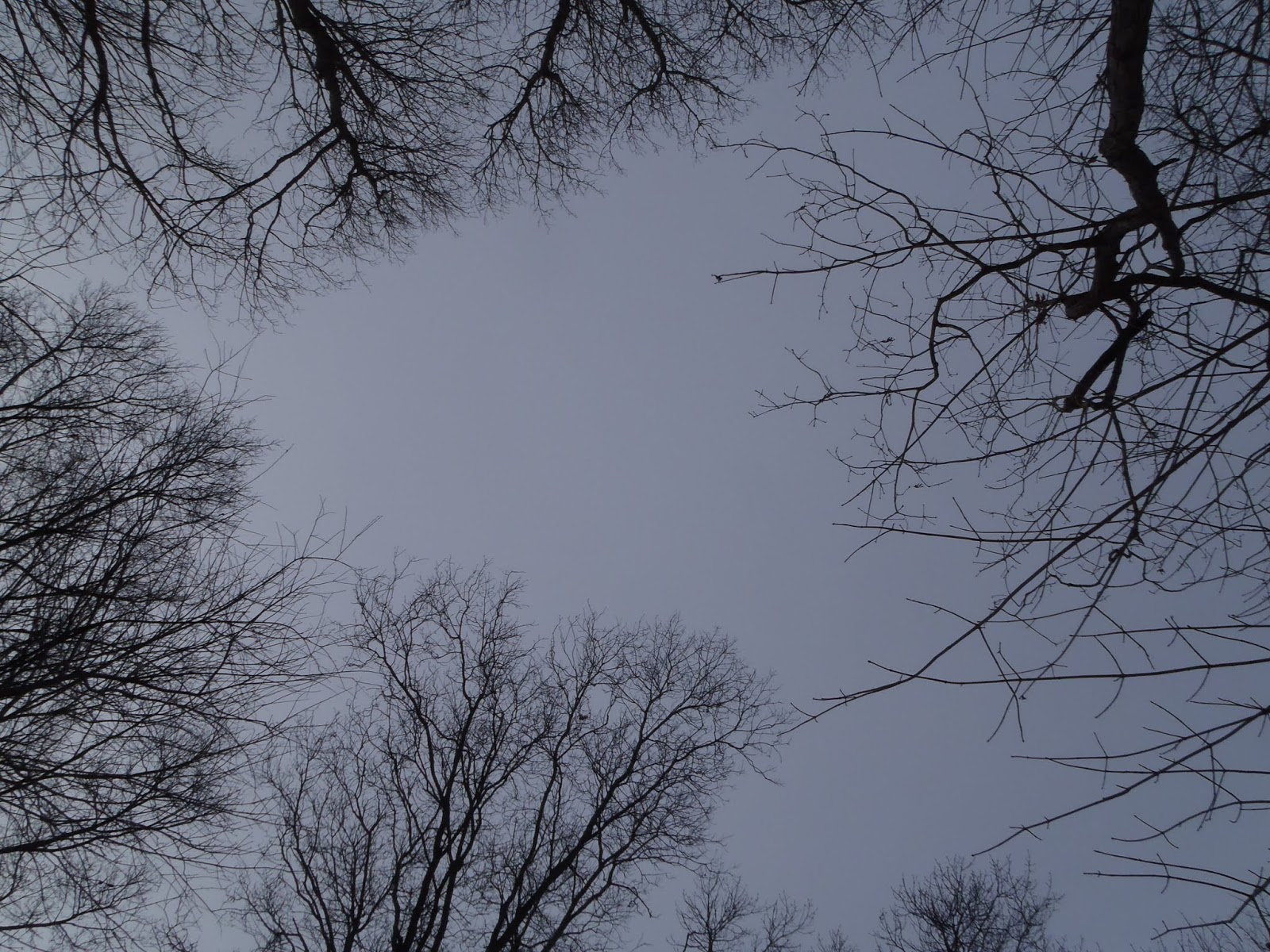
Took photos of woods and house from far-back anyway (+2.0
exposure). Went back to bed. By late morning, temp was above freezing,
wind had risen, and crowns of trees were sometimes impressively in motion. Since trees were often out of sync, twigs
near neighboring trees must take a beating.
Does the clashing of tree branches in the wind have a role in
controlling crown shape? I'd always
assumed that light was the only factor. Gotta see what's on the web.
Went out around noon with tripod
and took a good deal of video of tree crowns.
(The stars of the show are the white ash and white oak at the edge of the
woods.)


Our eastern coyote (coy wolf) had
wandered through at least a few times since the snow ended on Wednesday, but tracks came no nearer
to the house than the farback right against the woods. I want to name her--even if I do share her with a quarter of Brockton. What will it be?
Finally, took a set of standard photos for my Wild Place (in the little patch of woods out back). It had been awhile. Someday maybe I'll arrange all my Wild Place photos into a sort of time series "flip book."
Finally, took a set of standard photos for my Wild Place (in the little patch of woods out back). It had been awhile. Someday maybe I'll arrange all my Wild Place photos into a sort of time series "flip book."


A FEW DAYS AGO, during the latest
cold snap, I decided to investigate something I'd long been curious about. You may have heard that snow is actually a
blessing to plants and small critters during very cold weather, since snow is a
good insulator. The Inuit, also, make
their temporary winter shelters of snow--igloos. (Of course, the Inuit could only enjoy a balmy 320F indoors without melting
their home, but outside would be much colder, and windy to boot.) I collected a few food thermometers--the cheap
mechanical probe-with-a-dial-at-one-end type--and ventured forth over several
days to compare air temperatures with the temperatures at the ground surface,
under six to eight inches of snow.
Ideally, I'd do multiple measurements in several different environments with different depths of snow cover, or at different air temperatures. In the end, the uncertain accuracy* of these little thermometers restricted useful data to just a few moderately trustworthy measurements in several places near the house. The bottom line was that the temperature at the ground surface was very near the freezing point no matter what the air temperature was, down to at least 150F.
Ideally, I'd do multiple measurements in several different environments with different depths of snow cover, or at different air temperatures. In the end, the uncertain accuracy* of these little thermometers restricted useful data to just a few moderately trustworthy measurements in several places near the house. The bottom line was that the temperature at the ground surface was very near the freezing point no matter what the air temperature was, down to at least 150F.
The downside of snow cover is
that it also prevents the soil from warming up when the air temperature is
warmer than 320F.
Water is funny stuff. Because it is so familiar, we don't always
realize what a peculiar chemical it is. Their
slight electrical charges cause water molecules cling to one another (and other
molecules) giving water the property of absorbing enormous amounts of energy
when it goes from solid to liquid, or liquid to gas, and giving off that energy
when changing in the other direction. (This
is the reason ice is so useful for keeping your drink cold: even on the hottest
day, the ice in your soda will, in the process of melting, absorb whatever heat
it encounters, keeping your drink very near the freezing point until the amount
of ice is no longer adequate to keep up with it.)
In other words, the kinetic
energy of heat entering your drink is absorbed in the process of breaking molecules
of water free from the ice crystals of which they are a part--all without any
further temperature change. The amount
of heat needed to turn one kilogram of ice (at 320F) into one kilogram of water
(still at 320F) is 80 Calories. (Those
are "big C" or food calories, like those on nutrition labels.)
So by the same process snow or
ice cover will keep the ground at the freezing point until it is entirely gone. By the same principle, if a comfort-loving
Inuit were to try to heat his igloo above freezing, he couldn't succeed until
his roof fell in!
*Testing them in boiling water
and ice water (which have known temperatures of 2120F and 320F) showed them to
be off by half-a-dozen degrees at the high end, and a few degrees at the low
end. My further frustration with inconsistent
readings was finally solved when I discovered the needles sometimes got stuck
and needed a little tap to read
properly.


